Many temperature problems are airflow problems: warm pockets behind stacks, frost near doors, and noisy graphs after loading. This practical guide shows how pallet/crate geometry, evaporator placement, and ducted vs. open coil decisions create uniform cooling in Nepal’s retail, HoReCa, dairy, meat/poultry, and logistics rooms. With simple marking, loading rules, and monitoring, teams can flatten the curve—without upsizing equipment.
Introduction
Cold rooms chill the air, not the product directly. If air can’t reach the core of stacks, the coil works harder while product stays warm. In Nepal’s busy sites—tight back rooms, narrow docks, mixed crate sizes—airflow gets blocked by good intentions: just one more pallet. The fix is a mix of geometry, coil placement, and a few no-stack rules everyone can follow.
Market Reality / Pain Points
• Corners and high racks run warmer; labels fail or cartons sweat.
• Evaporator discharge pointed at the door; fog and ice build.
• Mixed crate types with vents that don’t align—air bypasses the load.
• No aisles for returns; air short-circuits near the coil and never reaches the back.
• After loading, alarms spike and take hours to settle.
How the Solution Works (clear, non-jargony)
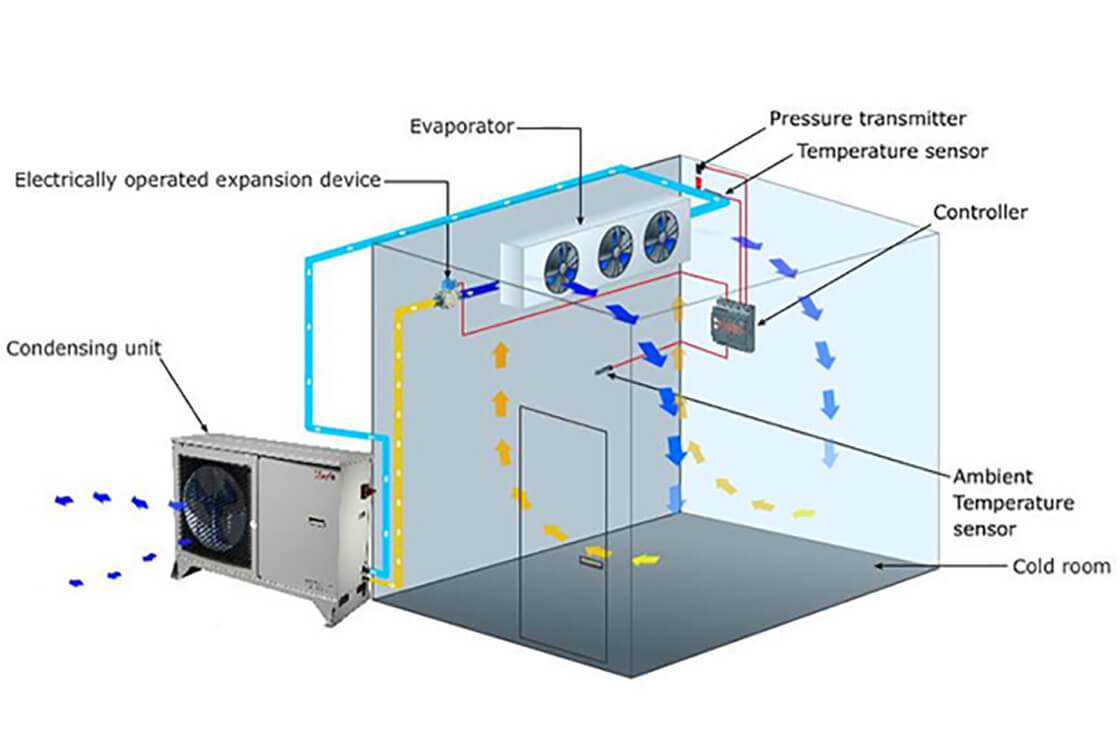
Air needs a path out (discharge) and a path home (return). Design both.
1) Evaporator placement
- Don’t aim discharge directly at the door.
- Keep a return lane—a marked aisle—so air can come back without pushing through pallets.
- In long rooms, consider two smaller units or a ducted solution for reach.
2) Open coil vs. ducted air
- Open coil (typical): Great for simple rooms with disciplined loading.
- Ducted supply/return: Adds reach and uniformity, especially with tall racks or L-shapes; cost and complexity rise, but so does control.
3) Pallet/crate geometry
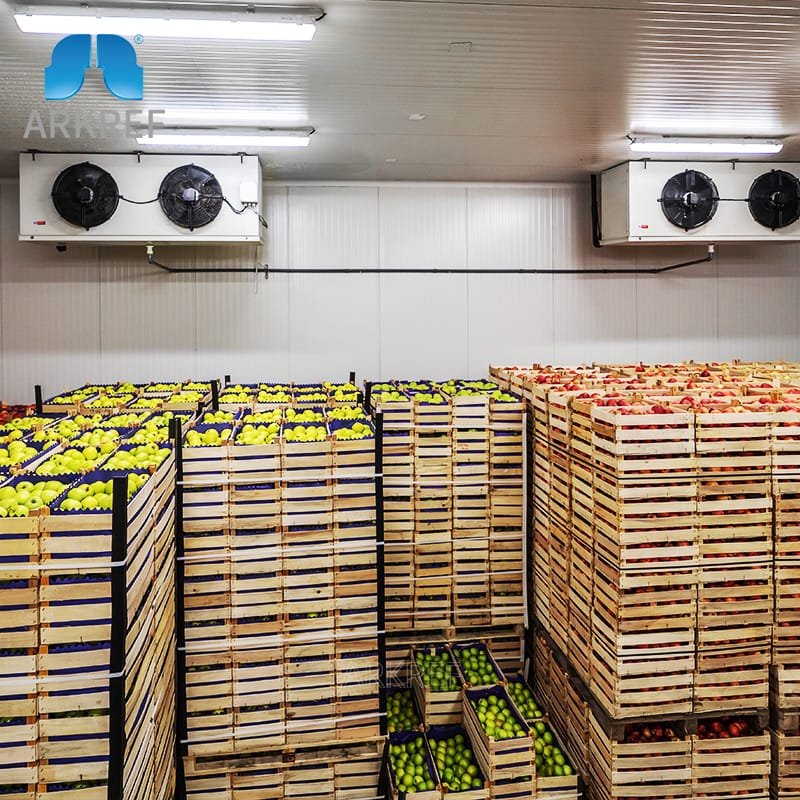
- Use vent-aligned crates; keep gaps between stacks (a hand-width to walls; clear over returns).
- Cap stack height to prevent dead zones under the ceiling or above the return path.
- For forced-air cooling inside the room, use temporary hoods to pull air through specific stacks.
Features & Advantages
• Flatter temperature maps; fewer hotspots/complaints.
• Shorter defrosts—coils see less moisture load and recover faster.
• Easier picking and safer floors with clearer aisles.
• More predictable hold times across seasons.
Nepal Use-Cases / Sectors
• Retail back rooms and cross-dock bays with rapid turns.
• Dairy / meat & poultry pack areas that need steady MT.
• HoReCa & central kitchens organizing prep, chill, and hold zones.
• Seed/produce stores managing crate stacks over weeks.
Operations & Best Practices
• Mark the floor: Discharge zone, return aisles, and no-stack boxes under the coil.
• Align vented crates: Keep vents facing the pressure path; avoid mixing closed and vented sides in the same stack face.
• Door discipline: Pair airflow rules with strips/air curtains; if doors are chaotic, airflow suffers.
• Defrost timing: Schedule during low traffic; verify termination so coils clear and stay dry.
• Monitoring: Place probes near door, at warmest stack, and near return; review post-loading curves weekly.
• Training: Bilingual cards with top-view sketches; 5-minute new-hire briefing.
Compliance & Quality
Uniform airflow underpins HACCP-style time–temperature control and aligns with DFTQC expectations. With fewer excursions, ISO 22000-style records become simpler and more credible.
Sustainability / Energy Considerations
• Airflow discipline reduces over-cooling just to hit the corners.
• Clean coils, tidy aisles, and realistic setpoints lower run hours and defrost load.
Benefits / Outcomes (qualitative)
More stable products, calmer graphs, fewer reworks, and happier teams who can find and move stock safely.
Implementation with RM Agrotech × ICEMAKE
We map room dimensions, load patterns, and door habits; choose open vs. ducted strategies; set marking plans; commission with probe placement and duration-filtered alarms; and train shifts with simple visuals.
Checklist — Airflow & Loading
• Mark return aisles and no-stack zones.
• Align crate vents; maintain gaps to walls and under coils.
• Decide open coil vs. ducted based on reach/geometry.
• Tune defrost + verify drain heat where needed.
• Place probes at door/warm stack/return; review weekly trends.
• Post bilingual loading cards; coach new hires in week one.
Call to Action
If your room is cold but uneven, fix the air path. RM Agrotech (authorized ICEMAKE partner in Nepal) will design marking, placement, and—where needed—ducting that your team can run every day.
FAQ
Q1. Can we solve hotspots by lowering setpoints?
Usually no—it increases frosting and run time. Fix airflow and loading first.
Q2. Do we need ducting in small rooms?
Not always. Open coils work well if aisles and stack rules are respected.
Q3. How many probes are enough?
At least three: near door, warm stack, and return. Trend them weekly.
Q4. Our labels fail near the door—why?
Infiltration and poor airflow; use strips/air curtains and avoid aiming discharge at the threshold.
Q5. Is two small coils better than one big coil?
Often yes in long rooms—reach improves and defrosts can be staggered.