Wet floors, iced drains, and lingering odors are not “just part of cold rooms”—they’re design and operations issues you can fix. This Nepal-focused guide shows how floor construction, slopes, drain hardware, pan/line heat, and daily SOPs work together to keep rooms clean, dry, and stable across monsoon humidity, dust, and frequent door traffic. As the authorized ICEMAKE partner in Nepal, RM Agrotech helps owners design, install, commission, and train for drainage that works—so cooling can focus on cooling.
Introduction
Great refrigeration struggles when water has nowhere to go. In Nepal, monsoon air, frequent door openings, and wash-down routines put liters of water onto floors and into evaporator pans. If that water lingers or refreezes: floors turn slippery, frost grows fast, odors appear, and temperature recovery drags. The fix is not “turn the setpoint down.” It’s hygienic drainage by design: floor buildup and finish that guide water, drains that don’t choke, pans and lines that stay warm when needed, and simple cleaning routines the night shift can maintain.
Market Reality / Pain Points
• Slippery floors from wash-downs and door fog—risk to people and product.
• Iced drains in freezers; pans overflow and refreeze under the coil.
• Odors & biofilm where standing water meets warm corners or clogged traps.
• Backflow at thresholds when outside gradients are wrong or door sills act like dams.
• Defrost penalties: meltwater can’t exit quickly, forcing longer warm periods and slow recovery.
• Maintenance fatigue: if drains are hidden or hard to open, nobody cleans them until a crisis.
How the Solution Works (clear, non-jargony)
A hygienic drainage system has four layers that must cooperate:
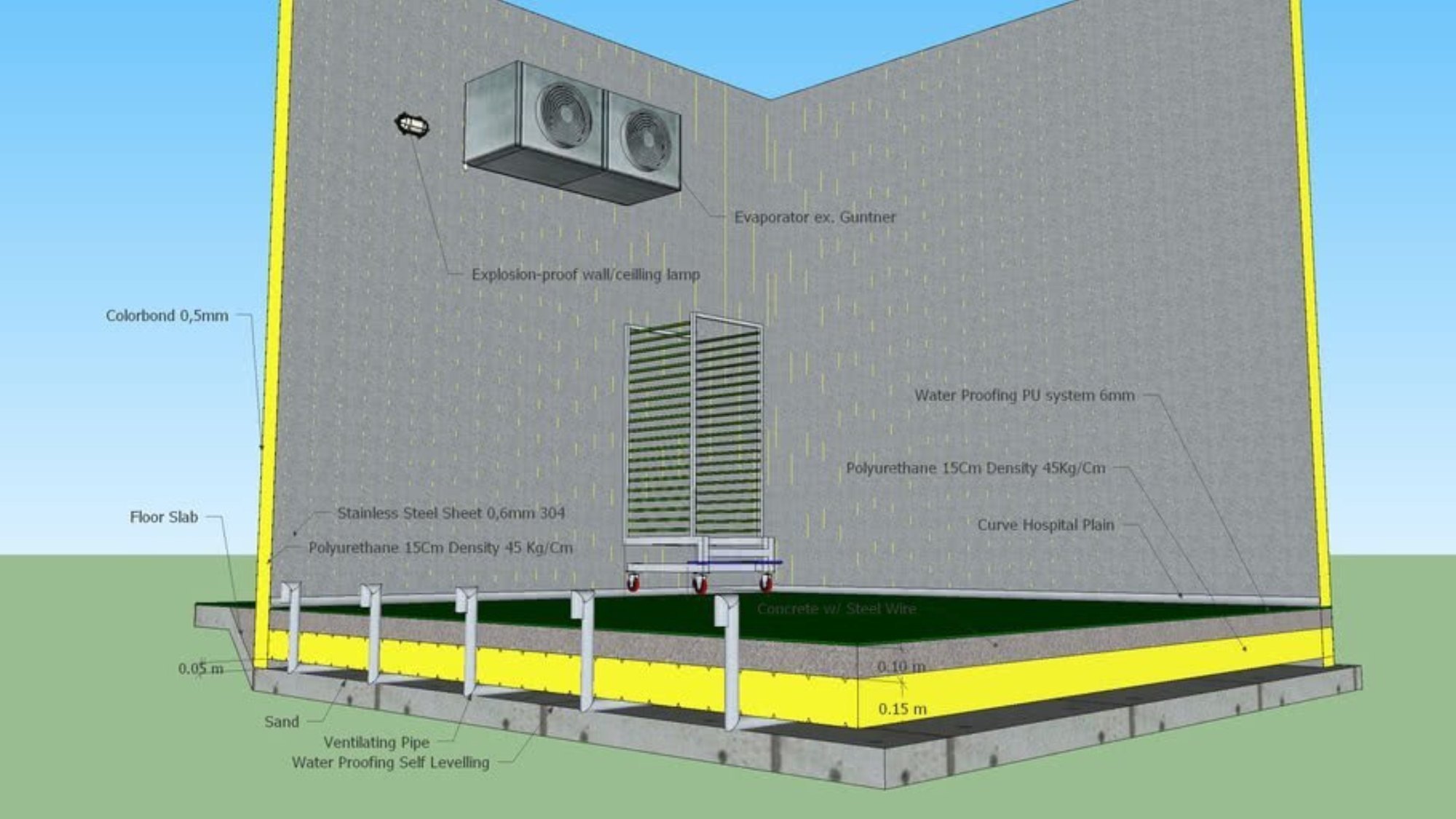
1) Floor build & finish
- Buildup that holds a consistent slope from wall toe to drain—no dish-shaped low spots.
- Durable finish that resists abrasion and thermal cycling and stays cleanable.
- Cove base where floor meets panel for cleanable corners; seal penetrations.
2) Slope & drain placement
- Short flow paths: place drains where water appears (under/near coils, wash-down areas, door thresholds).
- Multiple smaller drains are often better than one big distant drain; avoid pushing water across long, busy aisles.
- Threshold logic: inside and outside gradients should carry water away from the door, not toward it.
3) Hardware that stays clear
- Removable strainers and basket traps catch solids before they enter lines.
- Accessible cleanouts at logical intervals—if you can’t reach it, you won’t maintain it.
- Backflow prevention where external drains tie into shared lines that may surge during rains.
4) Heat where it matters
- Pan heat in evaporator drip trays (freezers).
- Heated drain lines until the pipe exits the cold envelope or meets ambient where freezing won’t occur.
- Defrost termination tuned so pans fully clear without excessive warm time.
Features & Advantages
• Dryer, safer floors—less slipping, calmer audits, happier teams.
• Faster temperature recovery after defrost and wash-down.
• Less frost on coils and less ice at thresholds.
• Cleaner rooms with fewer odor complaints and easier housekeeping.
• Predictable operations in monsoon and during high-traffic periods.
Nepal Use-Cases / Sectors
• Retail back rooms & cross-dock bays with frequent door cycling and floor cleaning.
• HoReCa and central kitchens where nightly wash-downs are routine.
• Dairy/meat & poultry rooms with wet loads and trimming/packing steps.
• Freezer stores that battle iced pans and frozen traps.
• Floriculture & produce rooms managing condensate around humidity swings.
How the Solution Works (design details that matter)
A. Floor build-up & interfaces
• Under-panel insulation & vapor barrier must remain continuous at floor–wall junctions.
• Coves & toe kicks: Use cleanable radii; seal edges so wash water doesn’t disappear behind panel skins.
• Finish selection: Choose a surface that tolerates traffic, detergents, and occasional thermal shock.
B. Slope strategy
• Design slopes to visible drains—if your eye can’t spot the flow path, the mop won’t either.
• Avoid “bowls” around drains; the slope must begin where water forms.
• Keep slope consistent across thresholds to stop backflow from ambient ramps or loading docks.
C. Drain hardware & routing
• Strainers/baskets sized for expected debris.
• Trap choice that retains seal but still opens for cleaning; locate traps inside accessible boxes.
• Pipe routing with enough fall; avoid long horizontal runs at low temperatures.
D. Heat & defrost coordination (freezers)
• Pan heaters sized to melt frost during defrost without overheating; ensure even heat distribution.
• Heated lines until drains exit the cold envelope; insulate appropriately.
• Defrost scheduling aligned with low-door-traffic windows; termination to stop as soon as ice is gone.
• After commissioning, run a pan-clear test: defrost, watch drain flow, verify no lingering pools under the coil.
E. Thresholds, vestibules, and fog
• For doors with heavy traffic, consider a vestibule; combine PVC strips or air curtains inside to cut moisture ingress.
• Provide scrub mats and squeegees near doors; assign responsibility for quick wipes after peak bursts.
Operations & Best Practices
• Daily quick clean: Remove strainers, dump solids, brush seats, refit.
• Weekly drain walk: Open cleanouts; flush with warm water; check trap seals.
• Post-defrost check (freezers): Look under the coil 10 minutes after defrost—puddles mean pan/line heat or slope issues.
• Wash-down choreography: Push foam and rinse toward drains; don’t swamp thresholds. Finish with a squeegee pass.
• Door discipline: Group picks; avoid props; the best drainage is less water to start with.
• Spill SOP: Use the right absorbent and disposal—don’t wash contaminants into traps.
• Tools live on hooks: Squeegees, brushes, and strainer keys visible and reachable.
Compliance & Quality
Good drainage supports HACCP-style hygiene, aligns with DFTQC expectations for cleanable floors and controlled water, and makes ISO 22000-style documentation easier: fewer slip incidents, fewer odor complaints, quicker deviation closure.
Sustainability / Energy Considerations
• Clear drains + tuned defrost shorten warm periods and re-cool time.
• Dry floors reduce fogging, which in turn reduces frosting load.
• Tight envelope at floor/wall cuts moisture ingress and lowers runtime.
• Right cleaning volumes save water and limit refreeze risk.
Benefits / Outcomes (qualitative)
• Safer, drier floors and calmer housekeeping.
• Fewer iced pans and nuisance alarms tied to defrost.
• Cleaner air (less odor), cleaner corners, easier audits.
• Teams that trust their room—because water goes where it should.
Implementation with RM Agrotech × ICEMAKE
As the authorized ICEMAKE partner in Nepal, RM Agrotech designs drainage with construction and operations in mind: assessment, design, installation & commissioning, training, and after-sales seasonal reviews with spare baskets/trap seals.
Checklist — Hygienic Drainage & Floors (print-ready)
• Plan short flow paths: drains near coils, wash zones, thresholds.
• Build consistent slopes; avoid “bowls” and low spots.
• Fit removable strainers and accessible traps; add cleanouts you can reach.
• In freezers, verify pan heat and heated lines up to the envelope exit.
• Align defrost timing with low traffic; enable termination to end on time.
• Seal floor–wall joints; keep cove bases cleanable; close panel penetrations.
• At doors, use vestibules or strips/air curtains; manage outside gradients away from the sill.
• Post daily/weekly SOP cards; hang tools on visible hooks; stock spare seals/strainers.
Call to Action
If water lingers, everything works harder—compressors, cleaners, and people. Talk to RM Agrotech (authorized ICEMAKE partner in Nepal) to design or retrofit drainage that keeps rooms clean, dry, and predictable.
FAQ
Q1. Our freezer drain ices every week—where do we start?
Check the pan heat, heated line up to the envelope exit, and defrost termination. If meltwater can’t leave promptly, it refreezes under the coil.
Q2. Do we need one big drain or several small ones?
Usually several small drains close to water sources. Short paths beat long squeegee pushes across busy aisles.
Q3. Can floor slope be “fixed” without rebuilding?
Minor lows can be addressed with skim coats/ramps to encourage flow, but significant corrections need resurfacing.
Q4. How often should strainers and traps be cleaned?
Strainers daily (5 minutes). Traps/cleanouts weekly or sooner if you see slow flow or odors.
Q5. Threshold keeps pooling—lower setpoint to reduce condensation?
Lowering setpoint often worsens frosting. Fix slope, outside gradient, and door air management first.
Q6. Are stainless drains necessary everywhere?
Use food-zone-appropriate materials. Stainless is durable and cleanable for high-wash areas; other suitable hygienic materials may suffice.
Q7. Will vestibules take too much space in small stores?
Compact vestibules or simply strips + correctly sized air curtains can deliver most of the benefit when space is tight.
Q8. What’s the quickest win we can do this week?
Install removable strainers, hang squeegees/brushes on visible hooks, and run a pan-clear check after defrost.