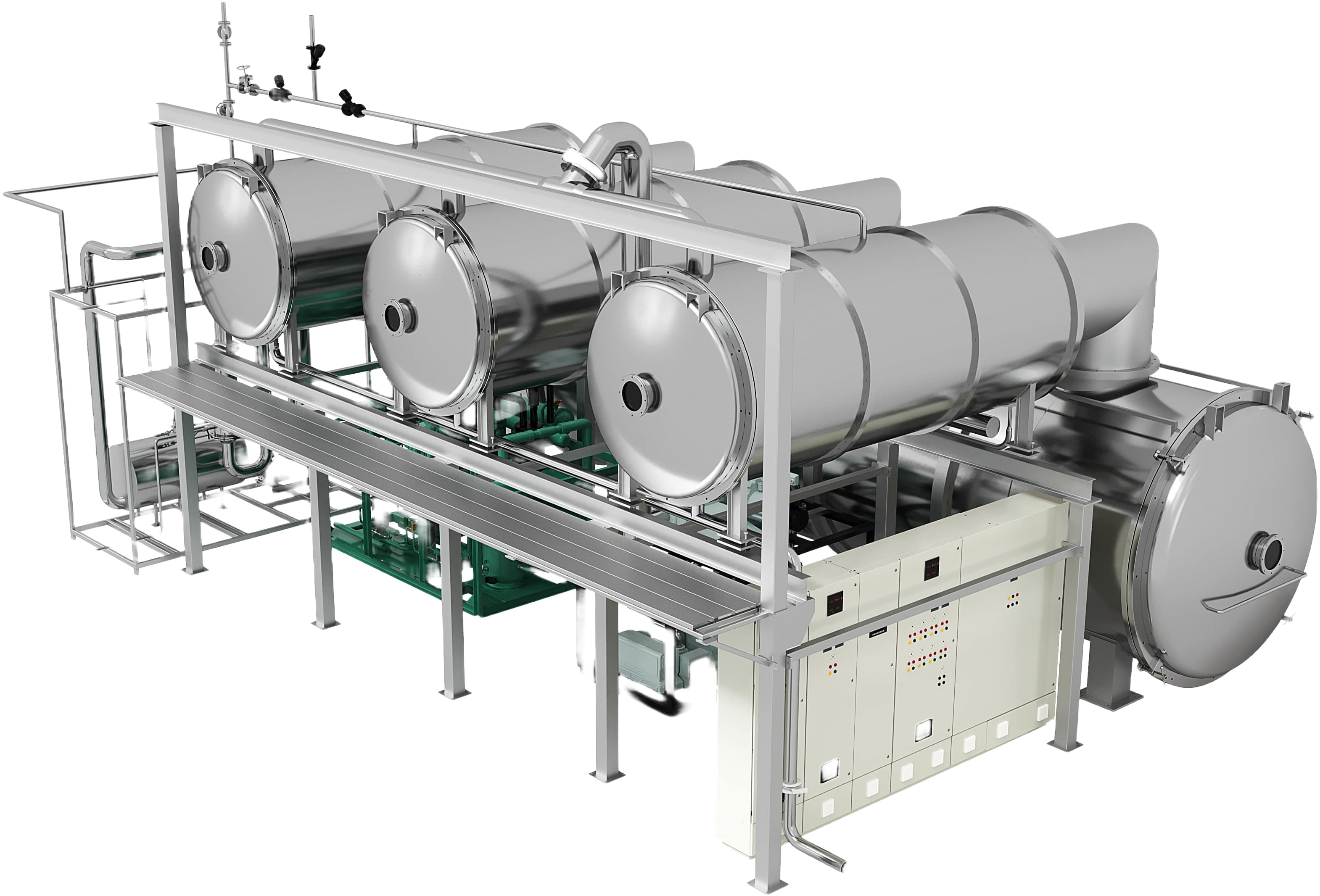
R.M. Agrotech equips Nepal’s food, nutraceutical, and small‑pharma processors with Dry Make (Ice Make) vacuum freeze dryers to preserve purity and unlock premium pricing. Operating at low temperature under vacuum, lyophilization removes water while protecting color, aroma, and heat‑sensitive nutrients—delivering clean‑label, export‑ready products without added preservatives. The technology is ideal for local raw‑material pockets such as Kakani strawberries, Jumla apples, lapsi, and high‑value herbs and spices (timur, ginger, turmeric). Our team supports you end‑to‑end—from pilot trials and capacity sizing to QC fundamentals (water activity) and packaging choices (high‑barrier pouches, oxygen absorbers)—so total cost of ownership and throughput align with your market. Visit our Kathmandu showroom to see the equipment and plan your first batches.
If you run a processing unit in Nepal—fruits, herbs, nutraceuticals, or small‑pharma—you’ve likely felt two pressures at once: seasonal gluts that you can’t fully use, and buyers asking for clean‑label products with long shelf life. Vacuum freeze‑drying (lyophilization) solves both. It removes water at low temperature and pressure, so color, aroma, and heat‑sensitive nutrients stay intact. The result is premium product that stores well without added preservatives—and commands better pricing. With R.M. Agrotech—the authorized Nepal partner for Ice Make’s Dry Make freeze dryers—you also get local consultation, Kathmandu showroom demos, and after‑sales service. In other words, you’re not just buying a machine; you’re getting a team to help you pilot, size, and run it right.
Why Nepal’s timing is right
Post‑harvest losses remain high. Various studies put fruit/veg losses around 20–30% in Nepal, and even higher when logistics break down. Turning surplus into stable, high‑value SKUs protects margins. (Swisscontact; MedCrave review)
Policy tailwinds. Nepal Trade Integration Strategy (NTIS 2023) pushes higher‑value agro‑exports, including spices and specialty foods—exactly where freeze‑dried quality matters. (NTIS 2023; Nepal Economic Forum)
Raw‑material clusters. Kakani/Nuwakot strawberries, Jumla apples (≈20,511 MT in 2024), and Bhaktapur’s lapsi industry provide reliable inputs for freeze‑dried chips, rings, and powders. (Kathmandu Post; Rising Nepal; NepalJOL)
What is lyophilization (vacuum freeze‑drying)?
In simple terms: you freeze the product, pull a strong vacuum, and gently add heat so ice turns directly into vapor (sublimation). Because it happens below the water triple point, you avoid the harsh heat that can dull color and flavor in conventional drying. Peer‑reviewed studies repeatedly report better retention of antioxidants, pigments, and aroma compounds compared with hot‑air drying.
Typical industrial ranges (Dry Make by Ice Make): working pressure up to ~0.2 mbar; refrigeration −40 to −50 °C; capacities from about 50 to 3000 kg/day. (Dry Make / Ice Make)
Freeze‑dry vs hot‑air/retort/drying tunnels
Here’s the quick reality check you can share with your team:
Factor
Freeze‑dry (Vacuum)
Hot‑air / Retort / Tunnels
Color, aroma, nutrients
Excellent retention; gentle on heat‑sensitive compounds
More loss from higher temperatures; retort gives ‘cooked’ notes
Texture & rehydration
Crisp/porous structure; rehydrates close to fresh
Chewier/denser; slower rehydration
Shelf life (no preservatives)
Very low water activity (often ≤0.3) — good for microbial stability
Depends on endpoint moisture; often higher aw
Energy & cycle time
Higher energy, longer cycles — plan batch size well
Usually faster and lower energy, but with quality trade‑offs
Nepal use‑cases you can start this season
These are realistic, low‑risk products that fit local raw materials and current demand.
Kakani strawberries → crunchy chips or bakery inclusions for hotels, airlines, and e‑commerce. Bright color, strong aroma, easy premiumization.
Jumla apples → rings and powders for breakfast cereals, trail mixes, smoothies, and kid snacks.
Lapsi (hog plum) → tart cubes/powder for snacks, candy alternatives, and vitamin‑forward seasoning blends.
Herbs & spices (timur, ginger, turmeric) → volatile‑rich granules and powders for spice exporters and nutraceuticals.
TCO in plain Nepal terms (typical ranges; validate in pilots)
Freeze‑drying is not the cheapest way to remove water—it’s the quality play. Plan for it with clear math. Below is a simple lens to align finance, production, and sales.
Item
Typical range / assumption
What it means for you
Energy
≈5–20 kWh per kg finished product (literature)
At ≈NPR 9.21/kWh (Dec 2024), energy ≈ NPR 46–184/kg. Tight recipes and tray loading bring this down.
Batch cycle
Varies by slice thickness, sugar/pectin; plan pilots
Run thinner slices for berries/lapsi; pre‑freeze well; monitor product temperature.
Capacity sizing
Dry Make models ~50–3000 kg/day
Match input to daily procurement; use cold‑room to buffer supply swings.
Labor & QC
Slicing, loading, aᵥ checks, packaging
Invest in a water‑activity meter and basic SOPs; the payback is shelf‑life confidence.
Energy price: https://www.globalpetrolprices.com/Nepal/electricity_prices/
Packaging, shelf life & compliance (keep it simple)
Target water activity (aᵥ) ≤ 0.3 for fruit snacks; verify with a meter during QC.
Use high‑barrier pouches: aluminum‑foil laminates or ALOx‑coated PET where suitable.
Add oxygen absorbers for longer storage; seal well and do transport/shelf tests.