Discover how RM Agrotech and ICEMAKE are transforming Nepal’s cold chain sector with advanced industrial ice plants designed for efficiency, reliability, and sustainable growth.
Industrial Ice Plants — Powering Nepal’s Cold Chain Infrastructure
Introduction: The Ice Behind Nepal’s Food Economy
Every fresh fish on a plate in Pokhara, every chilled bottle of milk in Kathmandu, and every safe vaccine that travels across Nepal’s highways depends on one invisible but vital component — ice.
Behind Nepal’s growing cold chain infrastructure lies the quiet efficiency of industrial ice plants — facilities designed to produce food-grade ice for preservation, transport, and processing. As Nepal modernizes its agri-business, seafood, meat, and dairy industries, the demand for reliable, energy-efficient, and hygienic ice production has never been greater.
In response, RM Agrotech, in collaboration with ICEMAKE Refrigeration, is introducing cutting-edge industrial ice plant solutions engineered to meet Nepal’s unique geographical, climatic, and economic needs. Together, they are redefining how the country produces and uses ice — from fisheries in Terai to dairy cooperatives in the hills.
The Role of Industrial Ice in Nepal’s Cold Chain
Ice is much more than frozen water — it’s a temperature stabilizer that sustains freshness, reduces spoilage, and ensures food safety throughout the cold chain.
Key Applications of Industrial Ice in Nepal:
• Fisheries: Preserving catch freshness during transport from coastal or inland ponds.
• Meat & Poultry: Maintaining hygiene and product integrity during storage and processing.
• Dairy: Supporting milk chilling and production of dairy products like paneer and curd.
• Agro-Processing: Cooling fruits and vegetables during post-harvest handling.
• Pharmaceuticals & Logistics: Supporting vaccine and temperature-sensitive product transport.
Yet, despite this broad demand, Nepal’s ice supply chain faces serious limitations — inconsistent production, energy inefficiencies, and limited automation. Traditional ice-making setups often rely on outdated equipment that consumes excessive power, produces uneven ice quality, and struggles under fluctuating voltage conditions.
This is where ICEMAKE’s industrial ice plant systems, distributed and supported by RM Agrotech, provide a modern, sustainable solution.
Understanding Industrial Ice Plants
An industrial ice plant is a facility designed to generate large volumes of ice in various forms — block, flake, tube, or slurry — for commercial and industrial applications.
Each type of ice serves a different purpose, and Nepal’s diverse industries often require flexible, multi-capacity systems.
Common Types of Industrial Ice:
• Block Ice: Dense and long-lasting; ideal for fish transport and cold storage.
• Flake Ice: Thin, soft flakes that cover products evenly; widely used in food processing.
• Tube Ice: Cylindrical ice with long melt time; suitable for beverages and packaging.
• Slurry Ice: Semi-fluid ice for quick cooling; perfect for seafood preservation.
ICEMAKE’s Ice Plant Technology — Precision Meets Efficiency
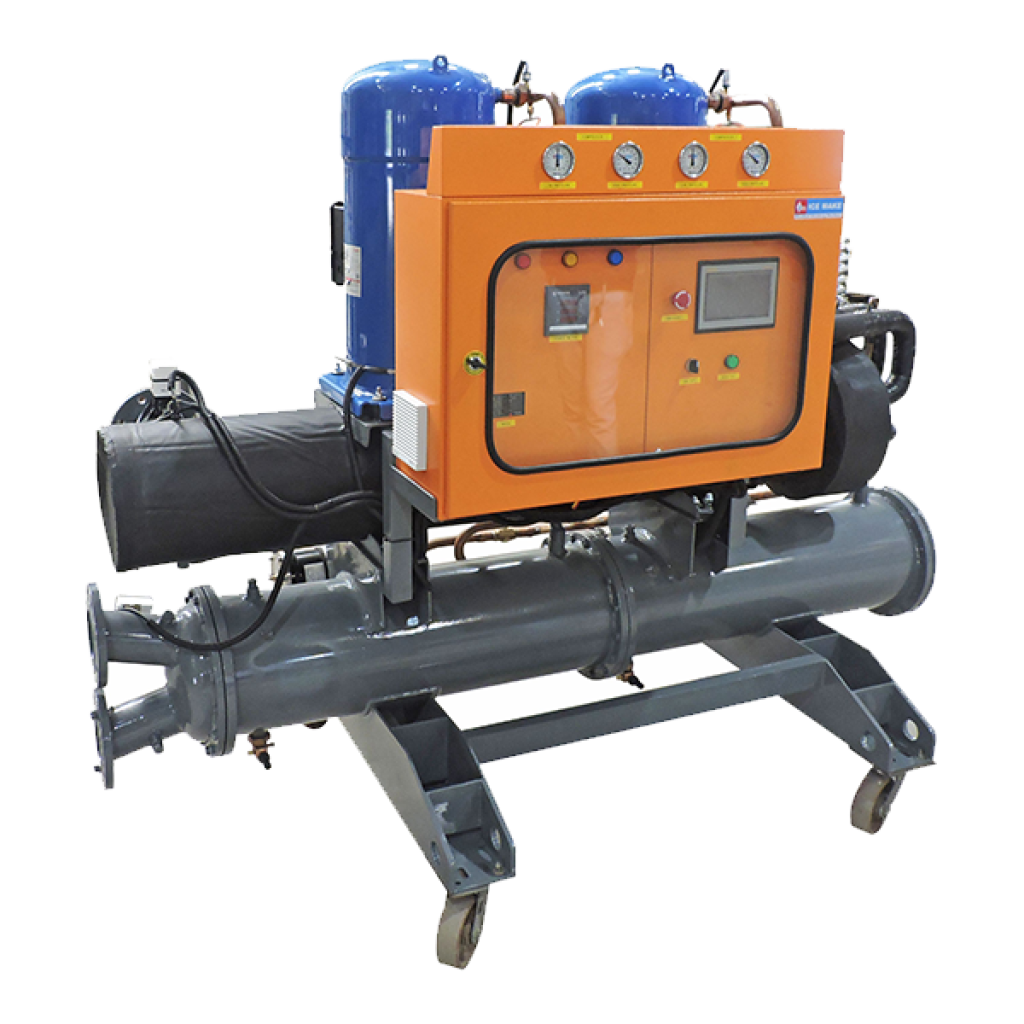
ICEMAKE Refrigeration brings global engineering expertise to Nepal’s local needs through its partnership with RM Agrotech. Their systems are built with an emphasis on efficiency, automation, hygiene, and durability.
1. Energy-Efficient Compressors
ICEMAKE’s ice plants feature advanced compressors designed for low power consumption and high output. They are optimized for Nepal’s mixed power grid, supporting both grid and solar-hybrid configurations.
2. Stainless Steel Construction
All contact parts are made from food-grade stainless steel (SS 304), ensuring hygienic ice production suitable for food and pharmaceutical industries.
3. Smart Automation and Controls
Digital PLC-based control systems regulate production cycles, monitor temperature and water flow, and optimize performance — reducing manual errors and improving consistency.
4. Eco-Friendly Refrigerants
Using green refrigerants such as R404A and R507, ICEMAKE’s systems minimize environmental impact while maintaining high refrigeration performance.
5. Robust Evaporators and Heat Exchangers
Efficient heat transfer design allows rapid freezing while conserving energy, ideal for high-demand environments like fisheries and dairy hubs.
Nepal’s Ice Demand: Where Growth Meets Challenge
Nepal’s food and beverage sector is growing at nearly 6–8% annually, creating massive demand for safe and consistent ice supply. However, this growth is uneven — while urban centers like Kathmandu, Birgunj, and Pokhara have access to reliable cold infrastructure, rural producers and small-scale processors face challenges.
Major Challenges:
• Limited Cold Infrastructure: Many cooperatives rely on manual freezing or third-party suppliers.
• High Energy Costs: Frequent power fluctuations make conventional systems expensive to operate.
• Quality Inconsistency: Ice contamination from poor water quality and unhygienic handling.
• Logistical Barriers: Difficult terrain increases transport time and spoilage risk.
To overcome these challenges, the combination of ICEMAKE’s precision engineering and RM Agrotech’s on-ground expertise delivers a system that is both robust and adaptable to Nepal’s real-world conditions.
Innovation for Local Impact: RM Agrotech’s Value Addition
RM Agrotech’s role goes beyond sales — it focuses on local adaptation, installation, and after-sales service.
Key Support Areas:
1. Site Assessment: Evaluating location, energy availability, and production capacity requirements.
2. System Design: Customizing ice plant layout and type (flake, block, or tube) based on usage.
3. Installation & Commissioning: Ensuring systems are operationally efficient and compliant with food safety standards.
4. Training & Support: On-site technical training for operators and maintenance teams.
5. Periodic Servicing: Scheduled preventive maintenance for reliability and longevity.
This ensures that Nepalese clients — whether large-scale processors or small cooperatives — gain maximum value and performance from their investment.
Sustainability Through Technology
In a world increasingly focused on climate-friendly solutions, industrial refrigeration must evolve.
ICEMAKE’s designs emphasize sustainability through energy optimization and responsible refrigerant use. The systems are compatible with solar-hybrid configurations, allowing partial operation through renewable power during load-shedding or grid failures — a major advantage in Nepal’s semi-urban and rural zones.
This approach aligns with Nepal’s national renewable energy and emission reduction goals, supporting green infrastructure while improving food safety and economic stability.
Economic Benefits and ROI
Investing in an industrial ice plant can provide measurable benefits for Nepal’s agri-business ecosystem:
• Reduced Product Losses: Longer preservation time directly increases marketable yield.
• Operational Savings: Efficient systems reduce energy costs per ton of ice produced.
• Improved Quality: Hygienic, uniform ice enhances product appearance and shelf life.
• Market Expansion: Reliable cold chain enables export readiness.
• Local Employment: Installation, operation, and maintenance create skilled job opportunities.
While every setup differs in scale, businesses typically see payback within 2–4 years, especially when replacing diesel-based or manual freezing operations.
Why Choose ICEMAKE Ice Plants via RM Agrotech?
RM Agrotech ensures that Nepalese customers receive:
• Tailored Systems: Designed for capacity, terrain, and application needs.
• Technical Reliability: Proven components with ICEMAKE’s warranty and support.
• Local Service Network: Technicians available for maintenance and troubleshooting.
• End-to-End Support: From project planning to post-installation guidance.
Together, ICEMAKE and RM Agrotech bridge global technology and local accessibility, helping Nepal’s industries build a strong, sustainable cold chain foundation.
Future Outlook: Building a National Ice Network
As Nepal’s food and logistics sectors expand, demand for cold infrastructure will only intensify. Future priorities include:
• Decentralized ice plants for cooperatives and local markets.
• Integration with cold storage and transport systems.
• Training programs for cold chain management.
• Increased renewable power integration.
These initiatives will ensure that the benefits of advanced refrigeration technology reach rural producers and small enterprises, not just industrial hubs.
Call to Action
From lake to marketplace, from dairy farm to dinner table — cold integrity matters.
By investing in reliable ice production systems, Nepal’s industries are not just preserving food; they’re preserving livelihoods, safety, and sustainability.
Build your ice plant with confidence.
Contact RM Agrotech, the authorized ICEMAKE partner in Nepal, for tailored, efficient, and future-ready industrial ice solutions.
Empowering Nepal’s cold chain — one degree at a time.